
Pass ❌
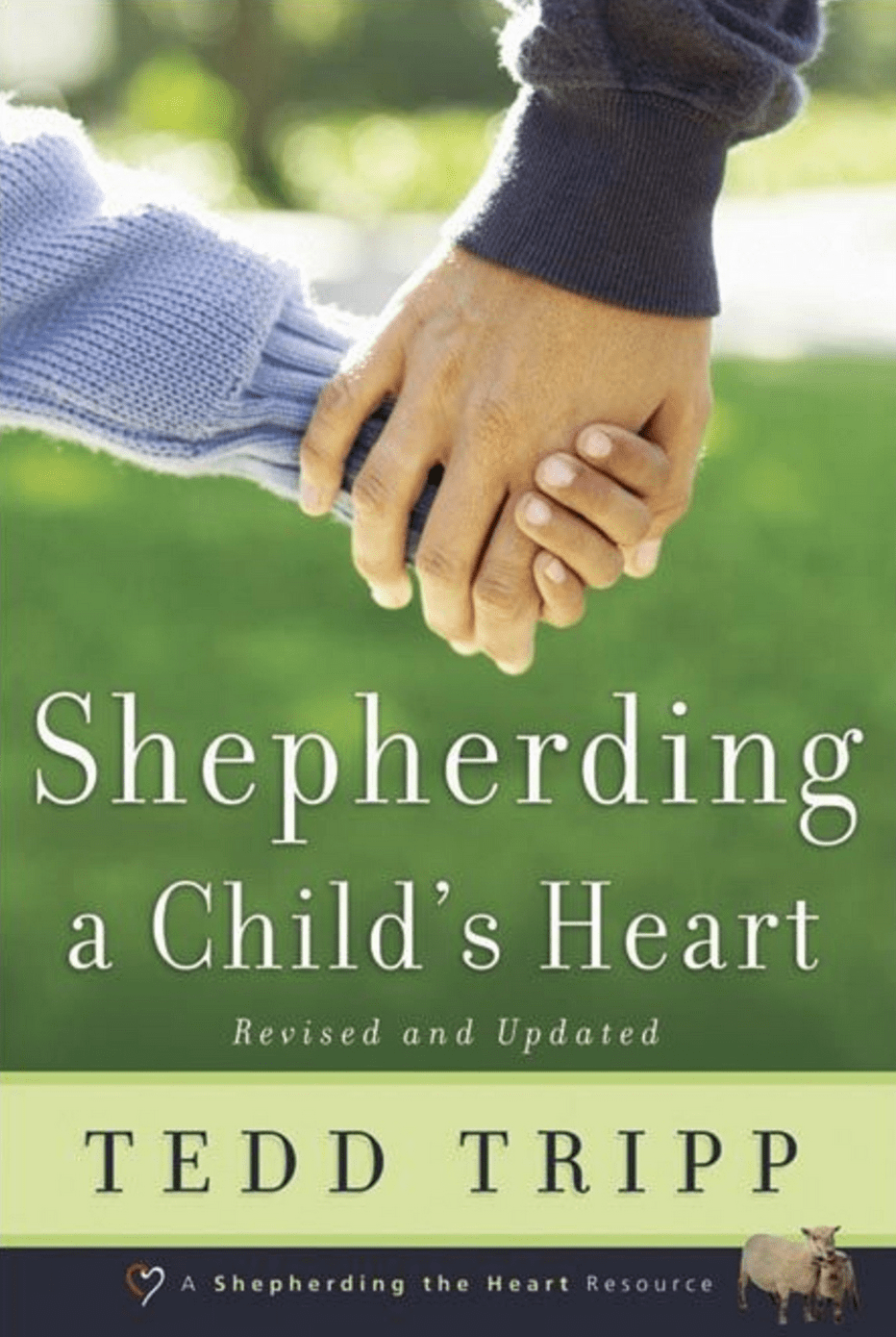
I can sum up the book’s message in one sentence: In order to obey God, you must hit children (p. 30). Every bit of “Christianese” advice and instruction in Shepherding a Child’s Heart (SACH) is centered around this disturbing lie.
Please be aware I won’t be using euphemisms like “spanking,” “discipline,” or “the rod” when talking about hitting a child’s naked bottom. Euphemisms are misleading and deceptive—these three in particular minimize the reality of what is actually happening to the child.
Let me outline a few of the primary issues I have with this troubling piece of literature:
SACH contains only TWO parenting tools: Communication and Spanking:
- Communication: While I’m totally onboard with the suggestion regarding communication, there is almost no practical application given on what or how to do it effectively. Good communication skills are not innate, and a parenting book should provide a wealth of clear, actionable tools and examples. Unfortunately, this chapter is filled with anecdotal stories from Tedd’s life instead of providing guidance on how to effectively facilitate interactions that are meaningful and advance mutual understanding.
- Spanking: Spanking is “God ordained,” mandated,” and “commanded” (Chapter 11 & 15) for changing the “orientation of a child’s heart” (p150). Pulling down a child’s pants and hitting their naked bottom should immediately yield “a harvest of peace and righteousness,” but if not, according to Tedd, tell your young child, “Daddy has spanked you, but you are not sweet enough yet,” so pull the pants down for round two.
There is very little, if any, education on child development. Tripp says not to spank children for childish behavior like “spilled milk.” However, he fails to define a distinction between what is childish behavior and what is not. The truth is that all undesirable behavior from a child stems from their inherent childishness—a lack of knowledge, life experience, and maturity. Therefore punishment (of any form) is an inappropriate response to misbehavior.
Side bar: Please hear me, I am not denying our sin nature, but labeling behavior as sin during conflict does not help anyone. When a child “talks back” for example, it indicates he needs more support with respectful self expression and self-regulation skills. And even if the young child’s behavior is connected to their sin nature, no amount of punishment will ever change the heart’s fleshly desires. That kind of change is found in the power of the Holy Spirit. Moving on…
The only behavior Tedd says that should never be consider childish, is a child resisting a parent’s instruction. According to him, the only reason why a child might not “obey” is because “something is wrong in his heart,” specifically, his “filthy” “idolatrous heart.” Could it be because he is hungry or tired? Who cares! The only reason a child resists a directive is because he is “worshiping and serving idols” and is “suppressing the truth in unrighteousness” by “refusing to acknowledge and submit the things God has made plain.” If throwing these biblical principles and heavy doctrines at a young child (yes, even babies) sounds absolutely wack-a-doo, then I’d like to grab a cup of coffee with you and discuss this madness together.
Bad theology: One of the major foundations of SACH is based on the incorrect belief that Proverbs is a collection of commands and divine promises. Citing Proverbs 23:14, Tedd asserts that a parent’s main role is to “rescue [their] children from death,” literal death, and spiritual death. Tedd views the child who engages in any push back with the parent as being in “grave danger.” He claims hitting naked bottoms is the “God-given remedy” to save children from their foolishness that ultimately leads to their death. More surprising, perhaps, is no mention of the Holy Spirit and His work in the unbelieving hearts of our children.
The parent is the Holy Spirit in the life of the child. Just like God, you can know the heart of your child- his true motives and desires (p.166). And as you accurately judge the “Godward orientation of their heart,” you have the power to create lasting heart change in your little “covenant-breaker” (p.173) by hitting them (p.150). And as their behavior changes to the trauma response needed for their safety, you can insure the child will obey “without challenge, excuse, or delay” (145). It’s imperative you hold your children to this unobtainable standard because failure to obey you, is the exact same thing as failure to obey God. Acting on God’s behalf, we can be assured that our choices (when to hit, how hard to hit, how many times to hit, etc) are God’s choices, too (p. 29, 30, 106, 130),
Abuse and inappropriateness: Some has already been mentioned, but these need to be highlighted.
- Hitting a child’s butt, a private part, “promotes an atmosphere of closeness and openness between the parent and child” and the parent “will experience intimacy with his child” (italics mine, p. 113). How disconnected with reality do you have to be to believe that hitting someone leads to “closeness,” or that it is “an expression of love” (page 36). Tedd promises that the child will always recognize being “struck” (his word this time) by the parent as being patient and gracious as long as the parent shows no anger. On what basis does Tedd know how a child will receive being hit?
- Tedd describes when his wife left their 8-month-old baby alone in a room with an obviously unstable shelf. Instead of providing supervision and a safe environment (good parenting), Margy decides to just tell the baby to stay away from the shelf, then walks away. When she “peeks” in and sees him headed towards the shelf, regretfully, she hits the 8-month old for “disobeying” (p. 152).
- In the section titled “The Rational Behind the Rod,” Tedd tells us that the baby who resists a diaper change “shows a determination not be ruled” because of the “foolishness bound up within his heart.” And guess what God has ordained to fix the infant’s heart? Hitting (p. 103).
Disturbing heart posture towards children: In stark contrast to what God says about children (a blessing, a reward, integral to God’s plan, a model for entering the kingdom of heaven, and immensely valuable) look at what Tedd says about George, a mere 2nd grader: George is an example of a smug and self-righteous Pharisee who is like the cup that is clean on the outside, but fifthly on the inside. George is wicked, intolerant, condescending, selfish, proud, self-righteous, and self-absorbed (p, 165). Shocking labels to pin on 7 year old. Sadly, this type of name calling isn’t an isolated event.
I could say much more, but I believe that the arguments I have presented sufficiently demonstrate the necessity of removing this book from church resources and discontinuing its recommendation to parents. Please share any thoughts you may have below.
Was this book review helpful? Subscribe to have articles like this sent to your email (almost) every Friday!
 Resources for Christian Discipline
Thank you for your thorough review of this book. I have read snippets and knew it was problematic from multiple sources across the web, but your summary and synopsis is singular. I would add to your last point that it *is* true that children are born with a heart towards sin and opposed to God, however this understanding by parents should lead us to recognize how very much we have already been forgiven of AND to extend the grace shown us through to our treatment of our children and know for sure that we will never train a childs heart away from it’s nature. Christ alone can save us from our sinful state and the Holy Spirit does the bulk of the slow and careful work of sanctification. There is no option to fast track holiness or readiness to repent in our children and a book that makes assertions to a formula for saving our children from damnation is frankly heretical.
LikeLiked by 1 person
I agree! It is Christ alone! I like how you phrased it, “there is no option to fast track holiness.” I think in a lot of ways it’s easy for parents to rely on a method instead of the Lord. It’s hard, I get it! Hopefully this is a place where parents feel safe to ask themselves where (or who) they put their faith in and learn ways to discipline in light of the grace and freedom we have in Christ. Thank you for your comment- keep ’em coming!
LikeLike
Ted Tripp advice is tremendously destructive to any parent who wants to build a family where children have a healthy attachment, if this is the goal please avoid the temptation to just follow along …. Please consider for yourself what you would like your child and your relationship with them to be in years to come
LikeLiked by 1 person
I couldn’t agree more! Than you for sharing your thoughts- sometimes I feel like I’m the only one who feels this way and it is so encouraging when others let me know I’m not alone! 👍❤️
LikeLike